
Should you put a screen or cover over a dryer vent?
No, and it is not a close call. Building code prohibits covering a dryer exhaust termination with a screen, and the dryer manufacturers say the same thing in their own installation manuals. A screen looks like cheap insurance against birds. In practice it becomes the blockage it was meant to prevent.
The short version
- check_circleScreens, mesh and grilles over a dryer vent termination are prohibited by code, and dryer manufacturers say the same in their own manuals.
- check_circleLint leaves the duct warm and damp, so it mats across a screen and closes the opening from the edges in.
- check_circleThe correct animal barrier is the damper flap already fitted to a proper exterior hood. Bird problems are nearly always a stuck-open flap.
- check_circleIf your dryer needs two cycles, the termination is a likely cause and worth checking now.
Why do people put screens on dryer vents?
An exterior dryer hood is warm, sheltered and about the size a starling goes looking for in spring. Across the western GTA they get found every year. Nests turn up in them every year, along with mice, wasp combs and the occasional squirrel hoard. Anyone who has dealt with that once will do a lot to avoid a second time.
So the goal is not the problem. Keeping animals out of your vent is exactly the right thing to want. The problem is that mesh is the one material guaranteed to fail at it.
What does the code say about dryer vent screens?
The residential code governing dryer exhaust requires the duct to terminate outside the building with a back-draft damper, and it specifically prohibits covering that termination with a screen. That is section M1502.3 of the 2021 International Residential Code, which is the model text the provincial codes follow.
Manufacturers are blunter than the code is. GE's installation instructions say to never install a screen or grid of any kind over the exhaust. The other major brands carry the same warning in different words.
It is worth being clear about why they all agree. This is not a bureaucratic preference. It is about what actually comes out of the duct.
What happens when dryer lint hits a screen?
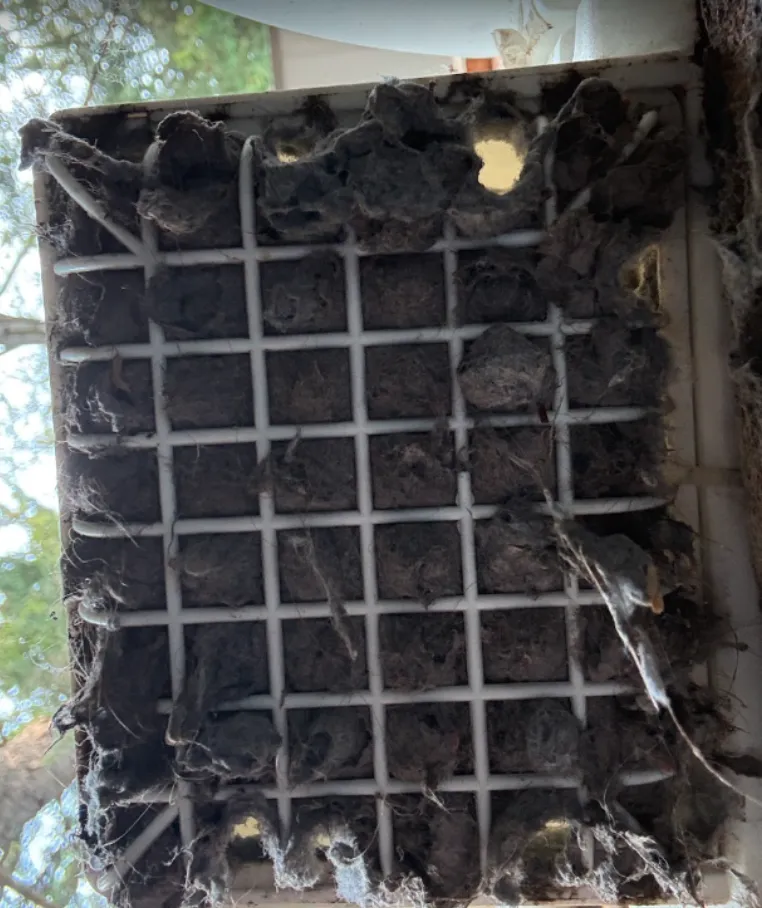
Dryer lint does not exit dry and loose. It exits carrying the moisture pulled out of every load, which makes it cling to whatever it touches. A mesh screen is close to a perfect surface for it: hundreds of small edges, all of them facing the airflow.
The lint mats across the openings. The mat holds more moisture. The opening closes from the edges inward, and it does it quietly, because nothing about your laundry changes on the day it starts.
By the time it gets noticed, the symptom does not look like a screen problem. It looks like a dryer that suddenly needs two cycles.
How do you keep birds out of a dryer vent without a screen?
A proper exterior hood carries a damper flap. Airflow pushes it open when the dryer runs, and gravity pulls it shut when the dryer stops. Closed, it is a solid panel. There is nothing for a bird to grip and nothing behind it to build in.
Flaps do fail. They get painted over, seized shut with lint, bent by a pressure washer, or propped open by the last lint that came through. A flap stuck open is what lets the nest in. So a bird problem is nearly always a flap problem, and fitting mesh over a broken flap adds a second fault on top of the first.
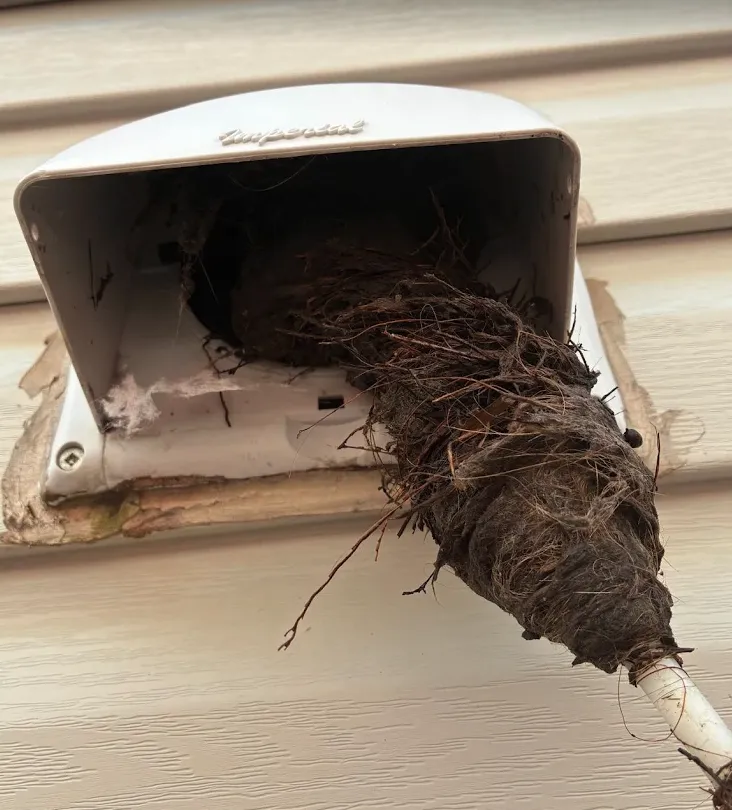
On every NestFlo visit the exterior hood comes off the wall and the flap gets tested by hand. If the hood is damaged or the flap will not seat, it gets replaced with a proper one. That is the compliant answer, and it is also the one that actually keeps the animals out.

How do you know if your vent is already blocked?
- check_circleLaundry needs a second cycle to come out dry
- check_circleThe laundry room feels hot or humid while the dryer runs
- check_circleLint is visible around the outside of the hood
- check_circleThe flap does not lift when the dryer is running
- check_circleA burning or hot-dust smell during a cycle
Any of those is worth acting on. The last one is worth acting on today.
Dryer vent covers, screens and what to do instead
A screen or mesh cover over a dryer vent termination is prohibited by the residential code and by the dryer manufacturers themselves. It does not keep animals out for long, and it fails in the one way that matters: warm damp lint mats across the mesh until the opening closes, and the first symptom most people notice is laundry that needs a second cycle.
The compliant fix is the barrier the vent already has. A proper exterior hood with a working damper flap seals shut when the dryer stops, and a flap that is painted over, seized or bent is what lets a bird in. Replace the flap or the hood, clear the full duct run, and confirm the airflow afterwards.
NestFlo does dryer vent cleaning in Burlington, Hamilton, Oakville, Mississauga, Milton, Waterdown, Georgetown and Stoney Creek. Every visit clears the entire duct run, removes and tests the exterior hood, and ends with a report and before and after photos.
Common questions about vent covers
Are screens or covers allowed over a dryer vent?
No. The residential code governing dryer exhaust requires the duct to terminate outside with a back-draft damper and prohibits covering that termination with a screen. Dryer manufacturers say the same in their own installation instructions. GE's wording is to never install a screen or grid of any kind.
Then how do you keep birds out of a dryer vent?
With the barrier the vent already has. A proper exterior hood carries a damper flap that airflow pushes open when the dryer runs and gravity pulls shut when it stops. Closed, it is a solid panel with nothing for a bird to grip. Almost every bird problem traces back to a flap that is stuck open, painted over or seized with lint, so the fix is a working flap or a new hood, not mesh over a broken one.
What about the pest covers sold at hardware stores?
Sold is not the same as compliant. If a product puts mesh, grille or grid across the opening, it has the same problem regardless of what the packaging claims. The lint coming out of your dryer is warm and damp, and it will mat across any surface you give it.
Which areas does NestFlo cover?
Burlington, Hamilton, Oakville, Mississauga, Milton, Waterdown, Georgetown and Stoney Creek. Just outside those? Ask anyway, and if we can reach you we will say so honestly.
How often should a dryer vent be cleaned?
The manufacturers do not fully agree. Whirlpool says every one to two years, Samsung Canada says once or twice a year, and the NFPA says annually. Households that dry more laundry, or that have a long duct with several bends, sit at the frequent end of that range.