
How do you know your dryer vent needs cleaning?
A clogged dryer vent rarely announces itself. It shows up as small changes you get used to. Loads take longer, the laundry room feels warmer, lint turns up in places it should not. Each one on its own is easy to ignore. Together they are the vent telling you the air is not getting out.
The short version
- check_circleThe first sign is almost always time: a normal load that used to dry in one cycle now needs two.
- check_circleHeat is the second. A dryer, or a laundry room, that runs hotter than it used to is trapping air it should be pushing outside.
- check_circleThe outside hood is the easiest thing to check. Run the dryer and look: the flap should be pushed open by a steady flow of warm air.
- check_circleDo not wait for the dryer to warn you. Samsung models only trigger their vent alert at around 60 percent blocked.
What are the signs of a clogged dryer vent?
These are the ones that show up on real jobs, roughly in the order people notice them:
- check_circleClothes need a second cycle. The most common sign, and usually the first
- check_circleThe dryer, or the whole laundry room, runs hotter than it used to
- check_circleA burning or musty smell while the dryer is running
- check_circleLint collecting around the door seal, on the floor, or behind the machine
- check_circleThe flap on the outside hood barely lifts, or does not open at all, while the dryer runs
- check_circleMore than a year since the vent was last cleaned
Any one of them is worth a look. Two or more together usually means the duct is restricted somewhere between the back of the dryer and the outside wall.
How can you check your dryer vent at home?
Start a load and go outside to the hood on your wall. You should feel a steady push of warm air, strong enough to hold the flap open. A weak puff, or a flap that barely moves, tells you most of what you need to know.
While you are there, look at the hood itself. Lint caught on the grille or piled around the opening means lint is not making it clear of the wall. A flap that is cracked, warped or stuck open is its own problem, because it lets in cold air, rain and nesting birds.
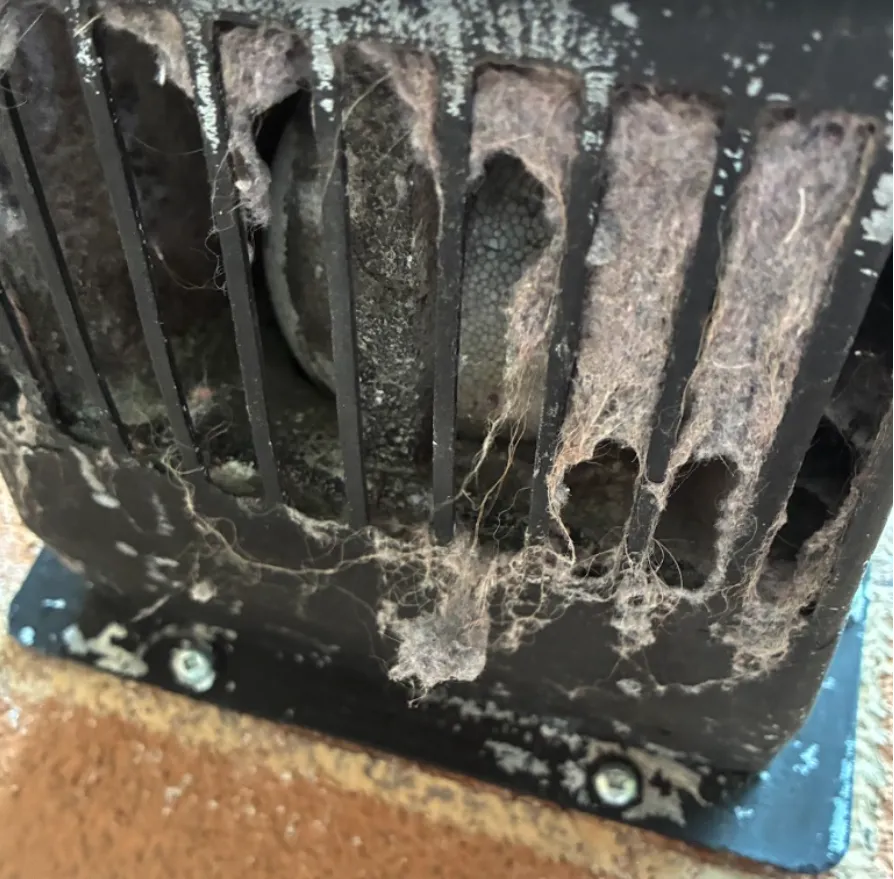
Then check behind the dryer. Lint on the floor or packed into the space around the connection means the joint is leaking, or the duct is backing up.
If the hood is the part that is failing, read why a screen or cover over the vent makes it worse.
What happens if you ignore a clogged dryer vent?
The cost you notice first is time and energy. A restricted vent means every load runs longer, and the machine works harder to get the same result. The damp laundry guide explains why a dryer can run hot and still not dry.
The cost that matters more is fire. Lint is fuel, and a restricted duct traps the heat right next to it. Failure to clean accounts for 31 percent of dryer fires, according to United States Fire Administration data for 2018 to 2020.
How often should a dryer vent be cleaned?
Whirlpool says every one to two years. Samsung Canada says once or twice a year. The NFPA says once a year.
Where your home sits in that range depends on the duct and how much you use it. Long runs, several bends, a vent that exits through the roof, and a big household doing laundry every day all push you toward the frequent end. A short straight run in a two-person home can go longer.
The signs above are the better guide. If you are seeing them, the schedule does not matter: the vent needs cleaning now.

The signs your dryer vent needs cleaning
The signs of a clogged dryer vent are a load that needs a second cycle, a dryer or laundry room that runs hot, a burning or musty smell, lint collecting behind the machine, and an outside flap that barely opens. The quickest check is outside: run the dryer and feel for a strong, steady push of warm air at the hood.
Manufacturers recommend cleaning every one to two years, and the NFPA says once a year, but any of these signs means it is due now. NestFlo does dryer vent cleaning in Burlington, Hamilton, Oakville, Mississauga, Milton, Waterdown, Georgetown and Stoney Creek, at a flat $199, or $179 for a first cleaning.
Common questions about a clogged vent
How do I know if my dryer vent is clogged?
The most reliable sign is a normal load needing a second cycle. Check outside while the dryer runs: the flap on the hood should be held open by a steady flow of warm air. Weak airflow, lint on the grille, or a flap that barely moves all point to a restricted duct.
Will my dryer tell me the vent is blocked?
Not reliably. Some models have a vent warning, but Samsung models only trigger theirs at around 60 percent blocked. Longer drying times and a hot laundry room will reach you well before the machine does.
How often should a dryer vent be cleaned?
Whirlpool says every one to two years, Samsung Canada says once or twice a year, and the NFPA says annually. Long runs, roof vents, lots of bends and heavy use all mean cleaning more often.
Is a clogged dryer vent dangerous?
It can be. Lint is flammable, and a restricted duct traps heat right beside it. Failure to clean accounts for 31 percent of dryer fires in United States Fire Administration data for 2018 to 2020.
Which areas does NestFlo cover?
Burlington, Hamilton, Oakville, Mississauga, Milton, Waterdown, Georgetown and Stoney Creek. Just outside those? Ask anyway, and if we can reach you we will say so honestly.